Embedded Analyst Model vs Centralized Data Team
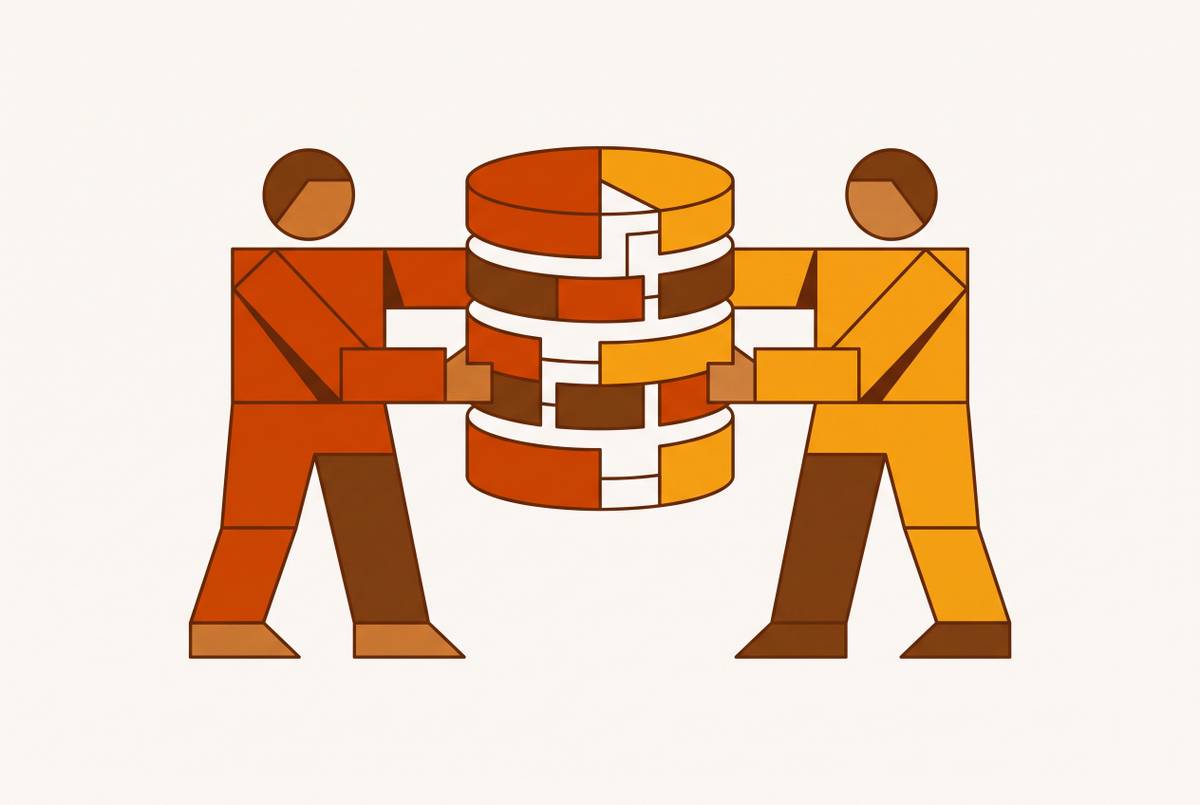
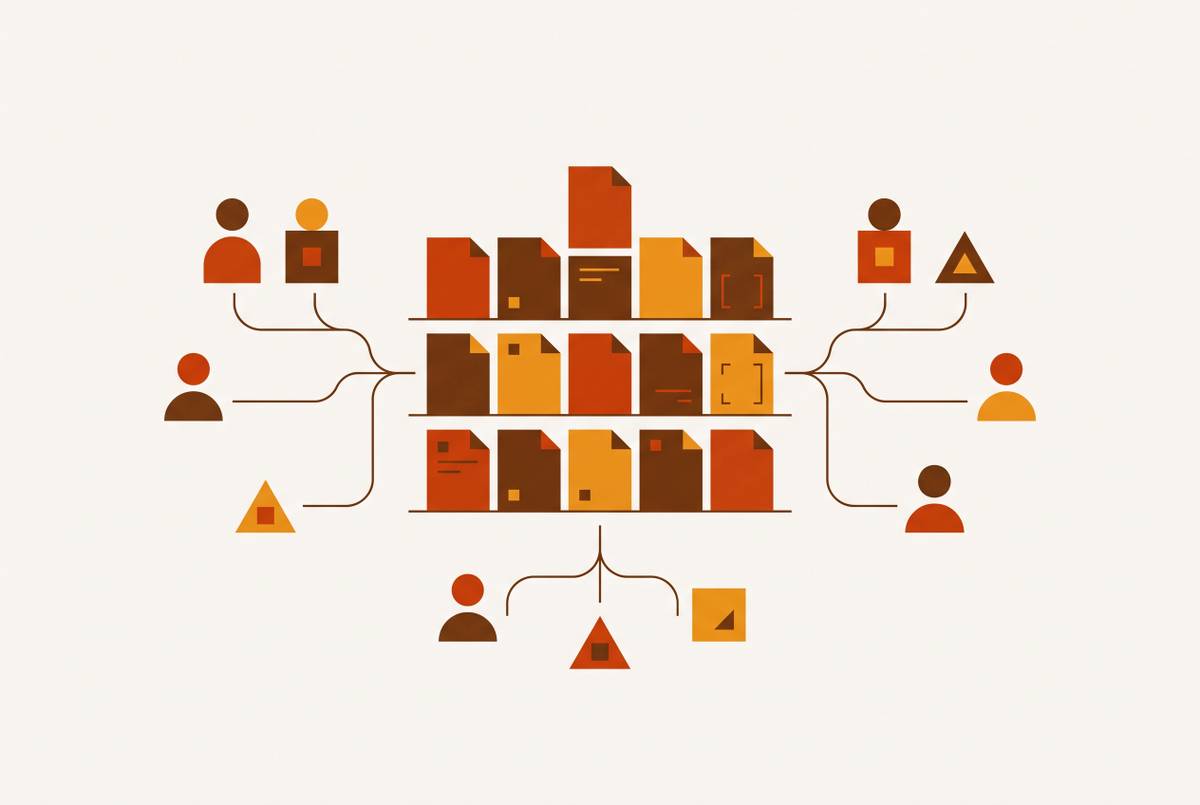
Choosing between speed and consistency determines which data structure won't eventually break.
Picture a data team sitting under finance, turning out tidy, backward-looking reports every month end, while two floors away the growth team has quietly built its own pipeline in BigQuery because nobody could give them a forward-looking number fast enough. Nobody planned that split. It happened because the first data hire reported to finance, and three years later, that accident of history is still shaping who gets answers and who gets a shadow pipeline. This is how most companies end up with the data team structure they have: not chosen, but inherited.
The real question a growing company faces is which problem hurts more right now: a lack of consistency and shared standards, or a lack of speed and domain fit. Both are real problems. Fixing one tends to make the other worse, and that trade-off is what makes this decision worth thinking through instead of just letting it happen.
What the centralized model delivers
A centralized data team's main selling point is consistency. One team owns the warehouse, the metric definitions, the governance rules, and the tools, so "revenue" means the same number whether finance, product, or the board is looking at it. That matters more as a company grows, because the cost of two departments disagreeing on a basic number compounds fast.
Centralization also saves money and builds expertise. Specialized skills concentrate in one group instead of spreading thin, people learn from a wider range of problems because they rotate across domains, and the company isn't paying for the same infrastructure three or four times over in three or four departments.
The place it breaks is predictable, and it has nothing to do with the people running the team. Industry estimates commonly put the share of a data team's time spent on cross-domain issues above 30%, and that number points to a structural bottleneck, not a staffing problem. As more departments show up with requests, the central team turns into a queue, and someone has to decide whose question gets answered first. Marketing waits behind finance. Product waits behind both. The team lead spends more hours refereeing priority fights than doing data work.
That bottleneck has a release valve, and it's not a good one. When departments can't get answers fast enough through the official channel, they start hiring their own analysts, picking their own tools, and building pipelines nobody signed off on. A request sitting in a queue for three weeks forces the business to act because it can't wait that long. A shadow data team showing up in marketing or product is a sign that the centralized model has hit its ceiling for that company's size, not a sign that the central team is doing a bad job.
There's a slower failure happening too. Analysts who rotate across every department's questions never spend enough time in any one business to really understand it. The queue might be short and the answers might still be worse, because nobody on the team knows the product, the sales motion, or the customer well enough to catch what the numbers are actually saying.
What the embedded model delivers
An embedded analyst sitting inside the product team already understands how the product team thinks. No ramp-up time, no translation layer between a business question and a technical answer. The analyst and the team share goals, so the output gets trusted and used.
That closeness removes a lot of friction. Fewer tickets, less back-and-forth explaining what a metric is supposed to mean, more confidence in the answer because the person giving it sits in the same stand-up.
The cost appears as drift, visible once teams compare numbers that should match. Say three analysts are embedded, one in product, one in marketing, one in finance, each building their own definition of "active user." Each definition makes sense inside its own team. Product counts someone active if they open the app. Marketing counts a click. Finance counts a paid seat. All three are defensible, and all three are different, and nobody notices until a cross-functional report lands on an executive's desk with three numbers that should be one number. That's not a meeting problem. Better communication doesn't fix it, because each definition was reasonable on its own terms; the structural gap opens the moment analysts stop sharing a single source of truth.
No single structure held for long, because a company's data needs keep changing faster than any one org chart can keep up with.
Embedding also narrows a career path. An analyst stuck inside one business unit works the same kinds of questions year after year, with less exposure to other domains and a thinner promotion ladder than a peer inside a centralized team, where seniority tracks across the whole function. And embedded teams tend to duplicate infrastructure. Each team builds or buys its own tooling. The company often pays two or three times over for something a shared platform would have handled once.
How company size and growth stage shift the tradeoffs
Neither model is right or wrong on its own. The trade-offs move as a company adds headcount, generates more data, and gets more organizationally tangled, so a structure that works fine at fifty employees can turn painful at five hundred.
Early on, roughly under two hundred employees, centralization tends to make the most sense, mostly because there isn't enough specialized talent to spread around. One or two data people have to cover the whole company, and putting them inside a single department starves everyone else of support. At this stage, the bottleneck problem is small enough to manage because request volume is still low, and the consistency benefit matters most while the company is still figuring out what its own numbers even mean.
Later, once a company has grown substantially, embedding starts to make more sense. The range of questions across departments gets too wide for any central team to hold real context on all of it, and individual business units get big enough to justify their own dedicated analyst. The middle stretch, neither a small startup nor a sprawling enterprise, is where most companies get stuck. They pick one model early, it works for a while, and they keep running it long after it stopped fitting the company they'd become. These size ranges aren't hard rules: the actual tipping point depends on how mature a company's data practices are, how many requests are flying around, and how often decisions cross departmental lines.
The hybrid hub-and-spoke structure that most companies eventually land on
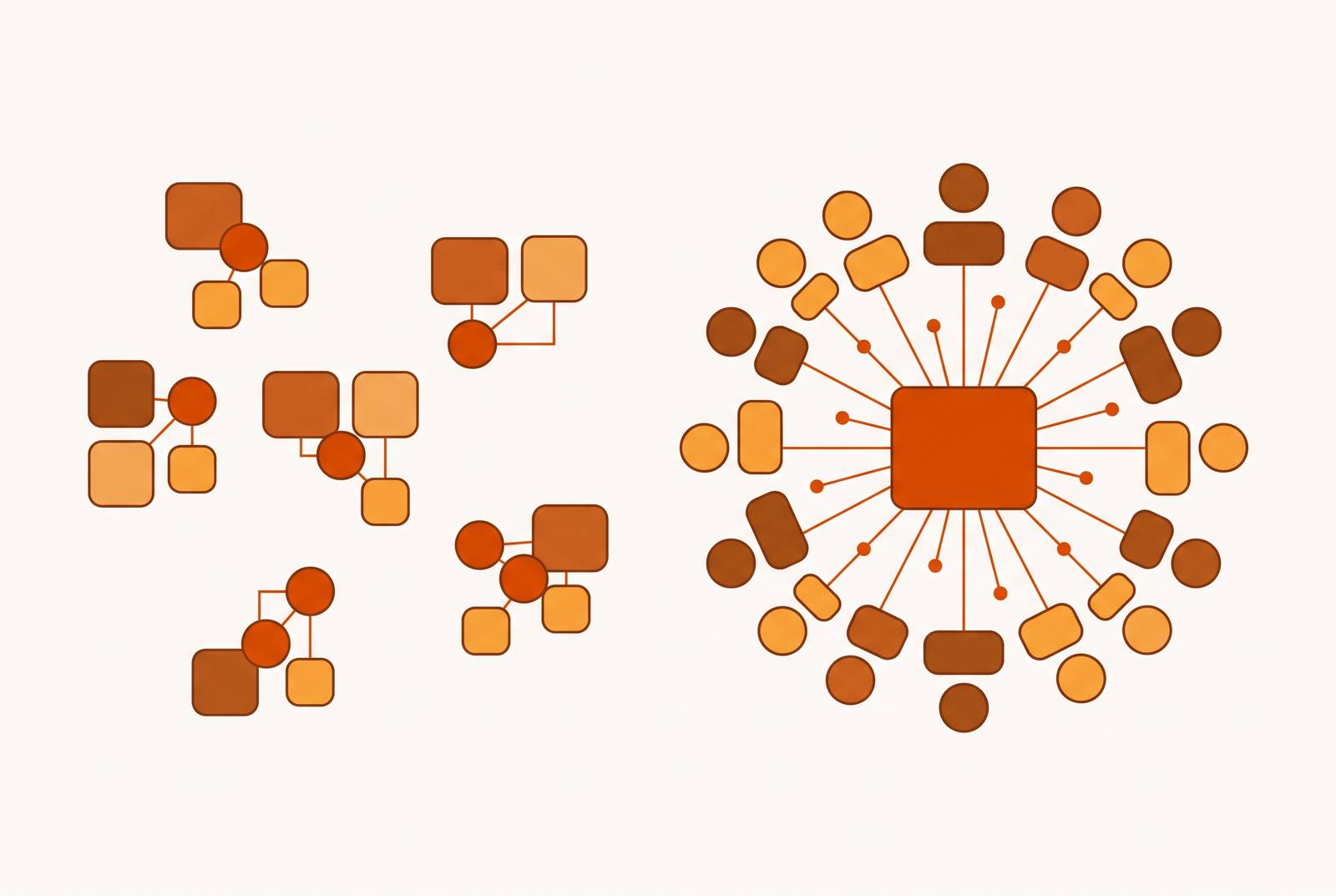
Most companies that go through this cycle a few times end up at something in between: a hub-and-spoke model. A central platform team owns the warehouse, the governance rules, the shared metric definitions, and the tooling standards. Embedded analysts sit inside business units, move fast on local problems, and build on top of that central foundation.
Done well, this captures the best of both sides. Embedded analysts still move at the speed of their business unit, but the hub keeps everyone working from the same definitions, so the metric drift problem that haunts the pure embedded model doesn't get the chance to take hold.
It's worth being honest that hub-and-spoke is harder to run than either pure model. It needs strong leadership on both the hub side and the spoke side, clear lines about who owns what, and some kind of political resolution to the tug-of-war between business unit leaders who want full control over their own analysts and platform teams that need everyone playing by the same rules, making it the structure that tends to survive growth once the simpler options stop working.
A related variant is the Center of Excellence model, where a central group owns best practices, tooling standards, and training, while the actual execution happens inside embedded teams. It adds a layer of shared knowledge without turning the center into a delivery bottleneck, since the center isn't on the hook for shipping the work itself.
Shared metric definitions are the load-bearing element in any hybrid structure
None of this works if the hub can't produce definitions that embedded teams actually trust. If the hub's definitions are wrong, out of date, or too hard to find, embedded teams will go back to building their own, and the whole metric drift problem comes right back.
The usual fix is a semantic layer. It sits between the warehouse and whatever tool is querying it, and its job is to make sure "active user" returns the same number no matter who's asking, whether that's a product analyst, a finance analyst, or a dashboard built for an executive meeting. Centralized teams get a lot of their consistency advantage from definitions like this being enforced somewhere, but that advantage only scales if the team accessing those definitions can actually do so without filing a ticket first. Platforms built around a governed layer of shared metrics let business units query the same definitions directly, so the central team's consistency doesn't turn into a new bottleneck of its own.
Building a semantic layer that's actually ready for daily use takes more time and more investment than most teams plan for going in. That's why a lot of hybrid structures end up running without the shared-definition layer they were designed around. The org chart says hybrid, but the metrics underneath it are still fragmented, team by team, because the shared-definition layer it depends on was never built.
Self-serve BI tools, including the newer AI-native ones that let non-technical users ask questions in plain language, only deliver safe self-serve access when they're built on top of those governed definitions. Without that foundation, they hand out fast answers that don't match the official numbers, and that mismatch damages trust more than having no self-serve tool. AI tools running against an ungoverned warehouse can return hallucinated metrics or numbers that flatly contradict what's already on a dashboard, and general-purpose AI tools are considerably less reliable on this point than tools built specifically for the task.
Data access and tooling choices that determine whether self-serve works safely
Once the metric layer is sorted out, the next question is who gets to touch the data, and how. The gap between safe self-serve and a security headache usually comes down to one architectural choice: handing non-technical users a SQL GUI, which opens up broad access to database objects, versus giving them a governed application layer that only shows the actions, records, and fields their specific role is allowed to see.
Least-privilege access should govern that choice. A tool that only needs to read data should be scoped to SELECT on specific views, nothing that lets it write, delete, or touch the schema, and that limit needs to be enforced by the tool itself, not left to someone remembering not to run the wrong query.
Row-level permissions matter a lot in a hybrid or embedded setup, because different teams need different slices of the same table. A sales analyst and a finance analyst are both looking at revenue, but neither should see the other's full dataset unless their role genuinely calls for it. Zero-trust principles, originally built for network security, are starting to show up at the database layer too: verifying every request, checking client identity continuously, and granting elevated access only for as long as a task actually needs it. That's raising the bar for what "governed access" is expected to mean inside a self-serve setup.
Basedash is built around this specific problem. It connects directly to a company's database and turns it into dashboards, saved queries, editable data views, and AI-powered analytics, with row-level permissions built in for Postgres. That lets engineering and data teams hand product, sales, marketing, and support teams real self-serve access, without handing out raw database credentials or SQL access, and without someone having to build and babysit a custom internal admin tool. It connects to Postgres, MySQL, and other databases directly, so it sits on top of whatever production data already exists instead of requiring a separate BI stack or a new warehouse layer. The embedded model's real strength, speed and a tight fit with the business, survives longer when analysts can see and reference one shared set of metric definitions instead of each building a private version from scratch. Other database GUI and BI tools differ quite a bit in how tightly permissions are tied to the underlying database structure, so it's worth checking whether access controls are actually enforced by the tool or whether they just depend on people following the rules.
How to decide which structure fits your company now
The decision was never about which model is philosophically correct. It comes down to which failure mode is closer: metric drift and duplicated work, the embedded risk, or a backed-up queue and fading domain knowledge, the centralization risk.
A few signs point toward too much centralization. Shadow analytics teams or shadow pipelines start popping up in different departments without any coordination from the main data function. Business units start making real decisions off numbers the central team has never seen. The data team's backlog is measured in weeks instead of days, and the team lead spends more time settling priority disputes than actually working with data.
A few signs point the other way, toward too much embedding. Cross-functional reports keep surfacing metric disagreements that need manual reconciling before anyone trusts the numbers. Embedded analysts keep rebuilding infrastructure some other team already built, because nobody told them it existed. New embedded hires have no career path to grow into and no community of peers doing similar work.
For a company running into centralization limits, the first move usually shouldn't be a full swing to embedding everyone. Giving non-technical teams governed self-serve access to data they're already allowed to see clears out the most common routine requests from the queue, and it does that before anyone has to touch headcount or reporting lines. For a company running into embedded limits, the first move is usually to fix shared definitions before touching the org chart at all, since getting the metric layer right takes a lot less time and political effort than a reorg, and it tells you whether the real problem was ever the structure or just the definitions underneath it.
Where the data team reports is itself a choice that deserves a deliberate answer. Data sitting under finance tends to drift toward backward-looking, defensive work. Under engineering, it tends to drift toward technical output the rest of the business can't read. Under a newly created CDO role, it can be too early for the function to have the influence that title implies. The right placement follows from what the data team's actual job is supposed to be, not from whichever department happened to sponsor the first hire. None of this is a one-time decision. The structure that fits a company today is not the structure that will fit it two growth stages from now, and building with that in mind beats chasing a permanently correct answer that doesn't exist.